01
Start in simulation
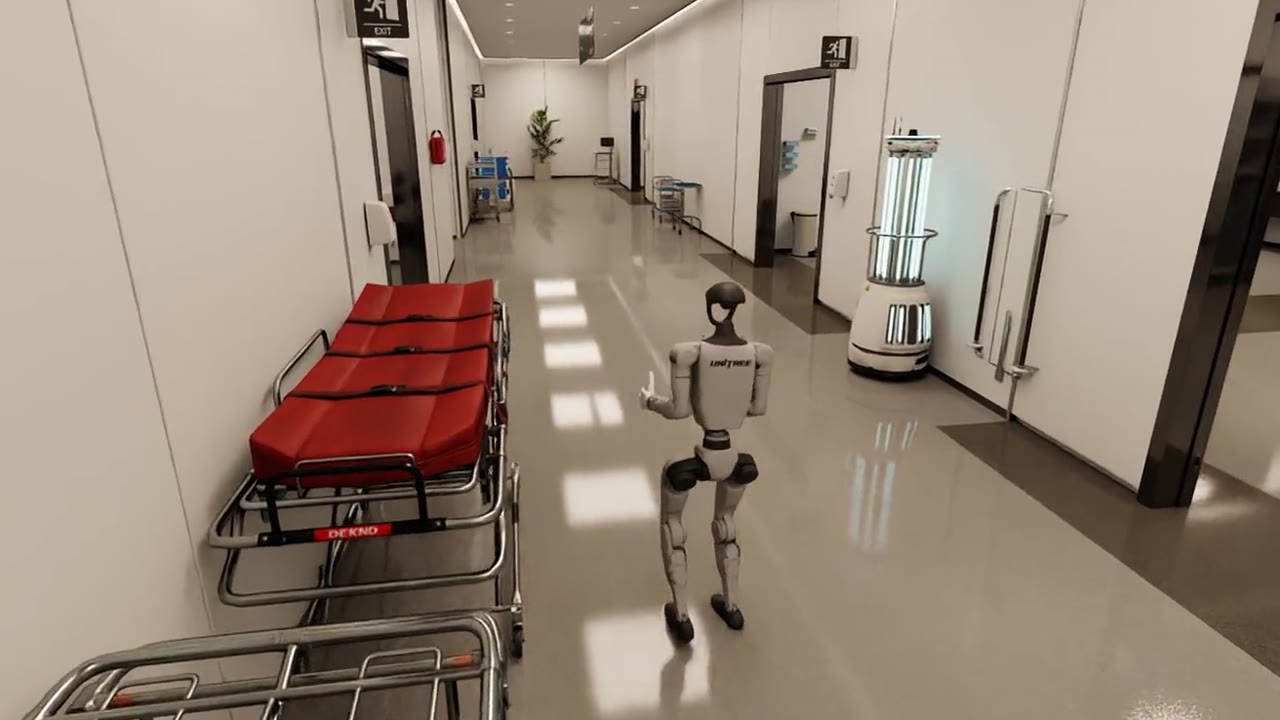
We test your task on a model of your site before a robot is bought or moved. A problem found there is far cheaper to fix than one found on the floor.
Company
Kyne Robotics makes Unitree, AgiBot and other off-the-shelf humanoids do useful work. Our software adapts each robot to a specific site and trains it for the job, and our engineers integrate it on site.
Why Kyne exists
Humanoid hardware is now something you can buy. What arrives is a capable machine with a walking controller and an SDK.
Getting it to pack a carton at the end of a line, or to push through a fire door and wait for a lift, is a separate piece of work. It takes task software, trained policies, a safety layer and days on site with the people who run the process, and it is the piece most buyers underestimate.
Kyne does that piece, and automates as much of it as possible: the site model, the training data, the training and the tests. We work across manufacturers, so whichever robot fits your task, our software makes it work in your building.
How we work
01
We test your task on a model of your site before a robot is bought or moved. A problem found there is far cheaper to fix than one found on the floor.
02
Code written against the manufacturer's SDK in simulation runs on the robot without a rewrite.
03
Each figure we publish comes with its method and the stage it was measured at.
04
Simulation is weak on soft goods and on people. We say so, and we test those parts on hardware early.
05
We are not tied to a manufacturer, and sometimes the right answer is a conveyor.
Based in London
Simulation and training run on our workstations and on cloud GPUs. Integration happens at your site, in person.
Founder
Kyne is led by Rakshith Bangalore Kumaraswamy, a robotics engineer with a background in humanoid R&D. He has trained neural policies for legged control and worked on actuator identification and the sim-to-real gap on platforms such as the Unitree H1-2.
He built both projects on this site, the AgiBot G2 pack-off cell and WardZero, and hosts the Unfiltered Robotics podcast.
Operations and engineering leads weighing up humanoids, teams with a robot that is not yet doing its job, and manufacturers looking for an application partner.